




Digitization on a Small Budget
A Practical Experience Report
Complex, expensive, and far removed from day-to-day work—unfortunately, at first glance, digitization is a topic that often inspires more respect than enthusiasm in very small businesses. Yet these are precisely the companies that cannot afford to waste capacity on tasks that could be automated.
We spoke with Dominik Zangerl about this fascinating balancing act. He supports his brother, Oliver Zangerl, owner of Zangerl Seilsicherheit, with digital topics—and openly describes where simple solutions reach their limits and why professional software can pay off even for very small businesses.
Two Brothers, One Small Business
And Little Room for Detours
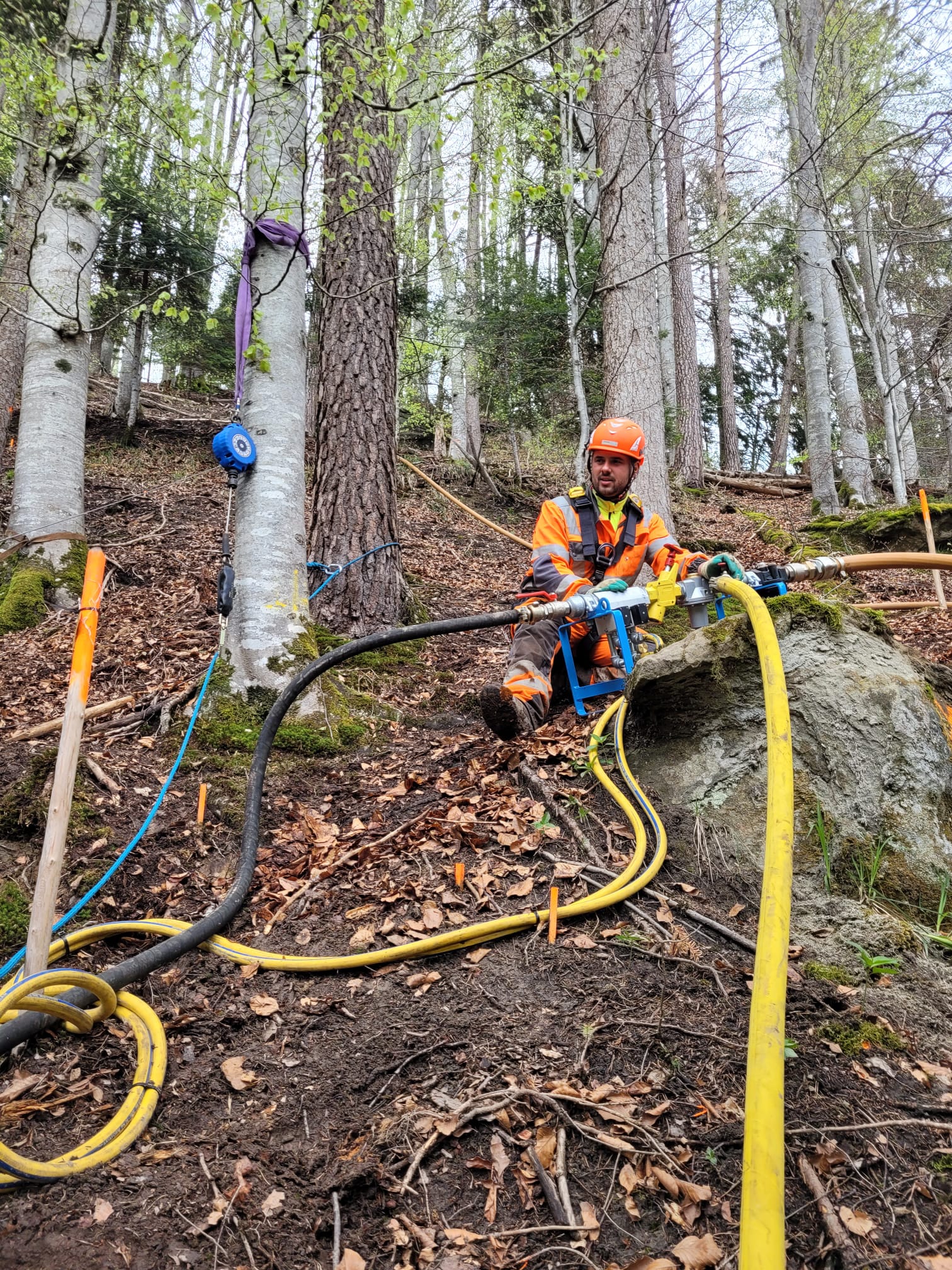
The starting point is quickly explained: Zangerl Seilsicherheit is essentially a one-man operation that collaborates with other small businesses and freelancers depending on the project. The projects—services in forestry, work at heights, and fall protection—currently number about five to ten per year. A manageable quantity, but still extremely time-intensive.
Dominik himself works full-time as a Digital Solution Architect in a large company. His professional background is in earth sciences, complemented by a master’s degree in management, technology, and economics. But when support is needed, the family sticks together, and Dominik contributes his expertise. “I usually find the time in the evenings after work. Or—as in this case—in Thailand on the beach. There are worse places to think about digitization.”
First Steps: Excel, DIY Tools
And Then the Limits
Digitization had been a topic at Zangerl Seilsicherheit for some time.
“Oliver started with Excel—then he built a protocol using a no-code app builder, which, honestly, wasn’t bad at all. A lot is possible today, but specialized construction has extreme demands, especially in terms of flexibility. If I need to adjust my processes on-site because the current approach isn’t working, you quickly hit the limits of such no-code tools.”
Dominik Zangerl
In hindsight, however, this was still a sensible first step to understand what was actually needed. Dominik recognizes a pattern he’s seen in many businesses: Simple tools work well for getting started. But when processes need to run reliably, scalably, and stress-free in the long term, they often fall short.
Good Tools Are Worth the Investment
What Dominik found particularly interesting was an observation from practice:
“Craftspeople and practitioners with their own businesses always rely on very good tools. These people can’t afford to have their operations delayed by broken or poor-quality tools—because their available time is usually fully booked. So tools, whether physical or digital, can certainly cost something—as long as they ultimately save money effectively.”
Dominik Zangerl
This mindset was also the background for the brothers’ discussions about SCALES as a tool for documentation and protocols. The idea had been around for a while, but it only became concrete when it was clear how much effort documentation and protocols were causing in everyday work.
However, the decision to try a professional solution also brought a mountain of concerns:
What does it cost? What does implementation cost? Who will handle the implementation? What if it doesn’t work? How does the pricing model work? And what if it doesn’t work in the end?
For very small businesses, it’s not just the price that’s an issue, but also the uncertainty of how to approach a digital project. Dominik describes it aptly:
“Complex maintenance work on the railway while operations continue—no problem. But when it comes to making profound changes to your own work with digital tools, where it’s not always clear in advance how exactly they will change your daily work—and you also have to trust a new software partner—that takes a considerable amount of courage and confidence.”
Dominik Zangerl
Much Ado About Nothing?
Well, not nothing. After all, the result is a simple solution to a tedious problem. But looking back, the start was surprisingly unspectacular, and the many concerns (and perhaps the occasional sleepless night) were ultimately unfounded. The key was trust and open communication on both sides (who knew? It actually seems to be the universal secret ingredient for all kinds of relationships). Oliver trusted Dominik’s experience from previous implementations, and Dominik knew that with eguana, they had a partner with whom solutions could be developed step by step.
“We looked at Oliver’s processes together and found that they align well with how others perform drilling work and create anchors. That’s good because it’s important to stay flexible and not constantly reinvent the wheel.”
Dominik Zangerl
Together, they quickly found a solution that Oliver could test directly in his daily work, allowing them to fine-tune and improve the last 20%.
At this point, Dominik also sees a stumbling block for comparable projects:
“I think what’s often missing is someone in the middle who translates practical needs into technical requirements. It’s normal for certain bugs to appear in the initial phase—but the developers at eguana usually fix the problems at record speed. I’ve never experienced that with a software developer before.”
Dominik Zangerl
So we can conclude once again: Open communication and mutual trust make all the difference 😉
Und das zeigt sich direkt auch noch bei der konkreten Umsetzung. Auch da stehen Kommunikation und Vertrauen an erster Stelle, so war Dominik eines besonders wichtig: draußen nicht zu viel vorzuschreiben.
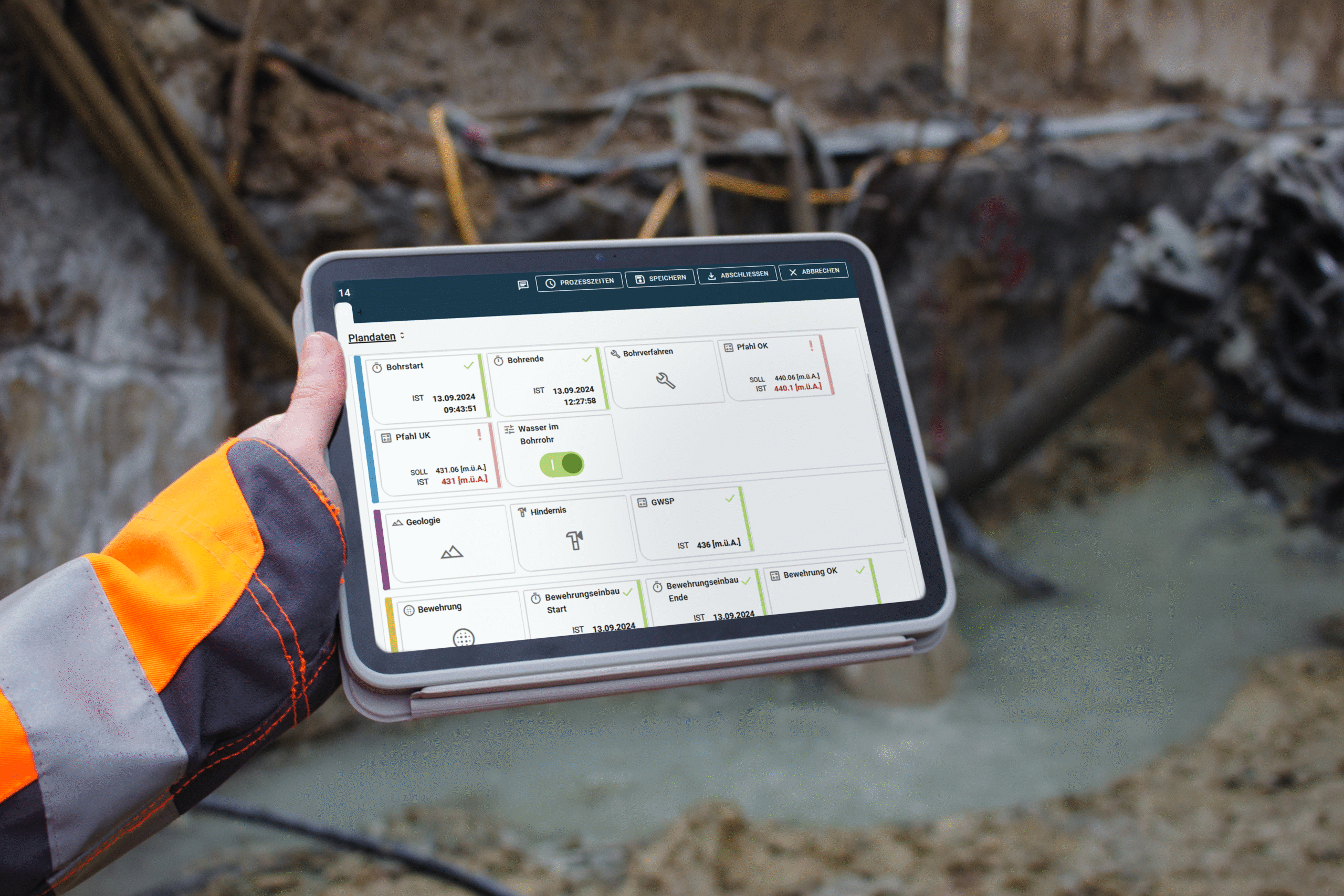
“I didn’t really care whether the foreman entered the data directly on the smartphone, mounted the tablet on the machine, or recorded the values later on the desktop. Initially, there are always some concerns—until the point where the foremen realize they can manage their own construction site better with data. Then it ‘clicks,’ and they take it upon themselves to ensure all data is always available in a timely manner. You must never underestimate employees’ intrinsic motivation to do their job well.”
Dominik Zangerl
The only important thing was that the data be recorded promptly—at the latest in the evening, so it could be reviewed the next morning. After all, it logically follows that the earlier the data is entered, the better the flow of information. Instead of having to ask whether a calculated target performance was achieved, the status is directly visible. This is especially important when problems arise, as they can be identified and resolved more quickly together.
“Oliver now always does it directly during drilling—if you can make it work that way, it’s ideal.”
Dominik Zangerl
Everyday Life with SCALES
Noticeable Relief
Zangerl Seilsicherheit now uses eguana ADD (Assisted Digital Documentation) for data entry, as well as visualizations and photo documentation. The photo module, in particular, has proven to be an unexpected “crowd favorite” in everyday work. “It’s an extremely cool feature. You simply have all the information in one place.”
As the number of projects grows, key figures are also becoming more important. After just a few projects, trends can be identified, and clients can be given direct access to data if needed—without the tedious process of sending protocols by email.
“The effort shifts from post-processing to work preparation. And that’s positive—because it’s more plannable and feels less stressful.”
Dominik Zangerl
Why Buying Is Almost Always More Sensible Than Building Yourself
After about five years of experience with operational data platforms, Dominik has developed a sense of the cost side of things. “Sure, you can ‘vibe code’ something today, but in my experience, that’s neither safer nor cheaper. Unless you have several million euros lying around, you shouldn’t even start trying to do it yourself.” You quickly realize that eguana has invested over ten years of software and industry know-how into SCALES—something you can’t replicate overnight. For most companies, it doesn’t make sense to develop such solutions themselves—and why should they, when there’s already a strong and flexible platform available on the market?
“Of course, eguana SCALES with ADD has its price, but anyone who calculates honestly will quickly see that the value generated far exceeds the costs. An ROI with a factor of three to five is realistic—and we can confirm this even for very small businesses.”
Dominik Zangerl
And now comes the strategic factor: With eguana as a supplier, Zangerl Seilsicherheit has secured its future.
Digitization as Strategic Safeguarding
Beyond efficiency, Zangerl Seilsicherheit is primarily concerned with future-proofing. No one expects an SME to become a digital pioneer in the industry.
“But we’ve made sure we won’t be left behind in the future.”
Dominik Zangerl
With eguana as a partner in the background, the business remains flexible—whether it’s about interfaces, new measurement values, or expanded use cases. Knowing that these issues can be solved is a huge relief. And Oliver retains the freedom and focus to concentrate on his core strengths.
Conclusion:
Start Small, Make the Right Decisions
The experience report clearly shows: Digitization doesn’t have to be a major project. Even without huge budgets, meaningful steps can be taken—if you’re willing to rely on professional tools and not try to build everything yourself.
Or, as Dominik puts it:
“It’s not about being able to do everything yourself. It’s about having the right tools—and the right partner in the background.”
Dominik Zangerl
Guest on the Blog: Dominik Zangerl
Dominik Zangerl is a trained earth scientist specializing in engineering geology and gained his first professional experience in construction execution in specialized civil engineering—where decisions count and processes must work.
For about five years, he has been intensively involved in data-driven digital platforms and their impact on operational processes. He hasn’t just theoretically evaluated various industry solutions—he’s tested them in real operations.
For him, digitization is not a trend, but a tool. And good tools must—just like on a construction site—be reliable and make economic sense.
Fun fact: There are two Dominiks—the other Dominik Zangerl works as a “Chef Pâtissier.” Maybe we’ll find a joint project there someday?

Interfaces You Can’t Program
Few people know better than Stefan Plainer that there’s more beneath Austria’s construction sites than just soil. As the CEO and founder of EOD Munitions Clearance, he has spent many years working where construction projects meet history—and, in case of doubt, unexploded ordnance.
You don’t skimp on Tools
Digitization on a Small Budget A Practical Experience Report Complex, expensive, and far removed from day-to-day work—unfortunately, at first glance, digitization is a topic that
FROM EXCEL TO PLATFORM: WHY SCALABILITY IN CONSTRUCTION DATA MANAGEMENT IS CRUCIAL
Scalable data management in construction—from simple Excel spreadsheets to professional platform solutions. Why project size matters and how eguana SCALES grows with your project. Learn more now.

From Data Dreams to Reality
Many performance specifications require digital systems for evaluation, monitoring, and documentation. We show you how to recognize what’s really meant—and which solution is the right fit.
The eye thinks too
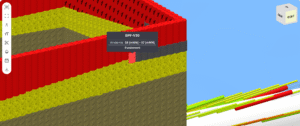
When we started developing our first visualisations, the goal was clear: to make construction sites more vivid, data more tangible, and decisions easier. What began as a simple point overlay on a digital map has since become a powerful tool. A tool that not only shows what was – but helps to understand what is happening, why it is happening, and what this might mean for the rest of the construction process.
A PICTURE IS WORTH A THOUSAND EXCEL SPREADSHEETS
In the beginning was the word. And that word was: “visualisation”. It was supposedly uttered by Philipp, Bernhard and Florian when they set up eguana in 2015. Just how much has changed over the past 10 years – and what the future still has in store for us – is demonstrated today by our “visualisation expert” Philipp Eder.