Why going forward we’ll not only know more, but make better decisions
Intuition is a strange but powerful thing. It’s brought us this far long before there was Google, ChatGPT, GPS, or Gantt charts. And honestly? It works—often better than people give it credit for.
Sure, “intuition” can sound like, “I just feel it,” but it’s not some mysterious magic; its effectiveness can be studied and even measured. One of the most cited investigations was done by psychologist Gary Klein, who studied how firefighters decide under pressure. What he found: in critical moments, seasoned responders frequently make the right call almost instantly, without conscious deliberation—and they’re right far more often than chance would suggest. Their advantage isn’t luck. It’s a deep, subconscious bank of experience quietly informing their snap judgments.
(Source:Klein, G. A., Calderwood, R., & Clinton-Cirocco, A. (1986). Rapid Decision Making on the Fire Ground. Proceedings of the Human Factors Society Annual Meeting, 30(6), 576–580;)
Also worth noting: In an experiment at the University of Iowa (Bechara et al.), participants played card games designed to reveal risk patterns — and their bodies (tracked via skin conductance) reacted to poor choices before they were consciously aware those choices were bad. In plain terms: sometimes the gut has an informational head start on the mind.
Someone who’s been on a construction site for twenty years can often tell immediately when something’s off. Maybe the chosen measure isn’t working as intended. Maybe the injection material is vanishing somewhere into the ground. Experience sharpens the perception. The gut starts ringing the alarm.
But it’s still just a feeling. It has no zoom, no trend line, no long-term breakdown. It can’t rewind or show what was different three weeks ago. When three metrics drift out of spec at once, gut feeling stops cutting it. Then you need data. Actionable data that doesn’t just sit there but tells you what to do next.
From Data to decision
Actionable analytics do exactly that: they turn data into clear recommendations, highlight where things are sticking, and give you objective decision support—fast, easy to grasp, and right in the middle of the workflow.
It’s not about replacing gut feeling. It’s about backing it up. Studies show that in familiar situations our instincts are often surprisingly accurate—but not perfect. When the groundwater level suddenly behaves in an unexpected way, a little system-generated support can be worth its weight in gold.
Between Buzzword and Jobsite
Actionable Analytics
The phrase sounds like it was pulled straight from a buzzword bingo sheet (somewhere between “synergy-driven” and “metaversified”). But it actually means something practical: data that doesn’t just inform—it tells you what to do.
In plain language: not an 80-page PDF with 723 charts and a mysterious color legend, but a clear next step. For example:
„Adjust injection parameters in section 4“
„Material consumption is 12% above plan—possible leak?“
„Inspect borehole XY—deviation is outside tolerance“
It’s the difference between a weather briefing full of pressure graphs and the simple question: “Rain jacket—yes or no?”
From Data Overload to Decision Support
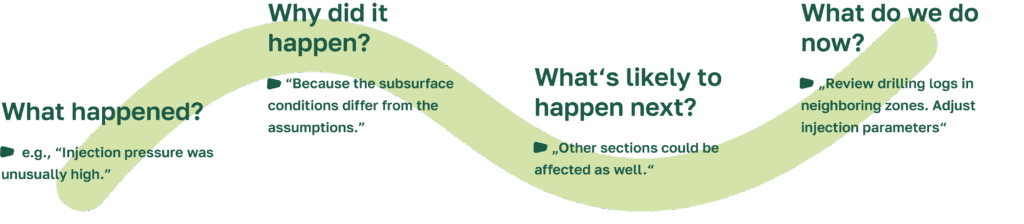
There’s a big gap between “we’ve got all the data” and “we know what to do next.” Turning numbers into actionable insight requires several complementary layers of analysis:
These four questions aren’t a strict sequence—they’re the framework for sound decision-making. Whoever can link these layers with digital tools is able to react faster and with more confidence.
This is exactly where SCALES is evolving step by step. Not everything is automated yet, not everything happens with the push of a button—but with each new feature, visualization, alert, and clearer data structure, the room to act grows. Data turns into decisions. Decisions drive progress.
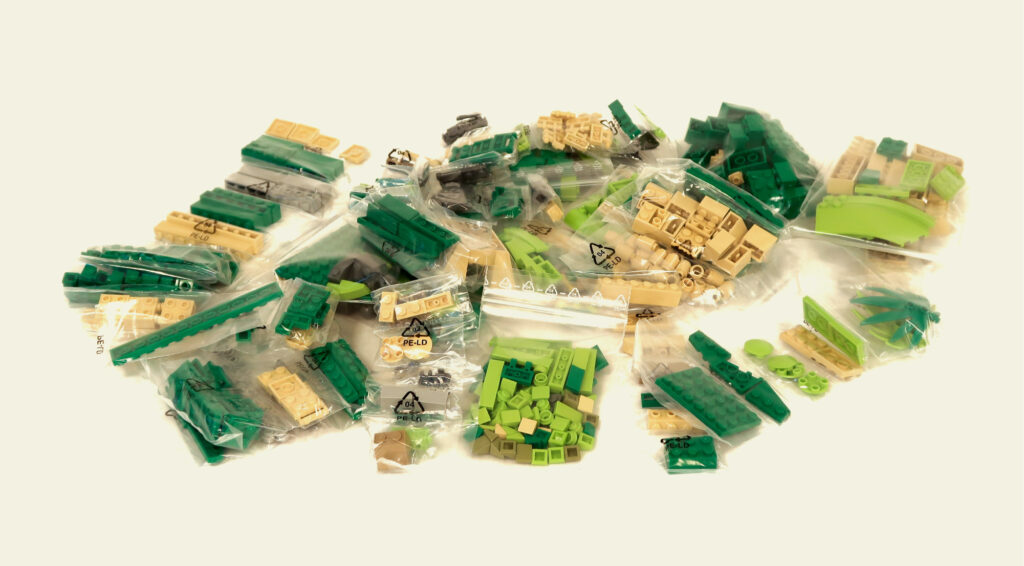
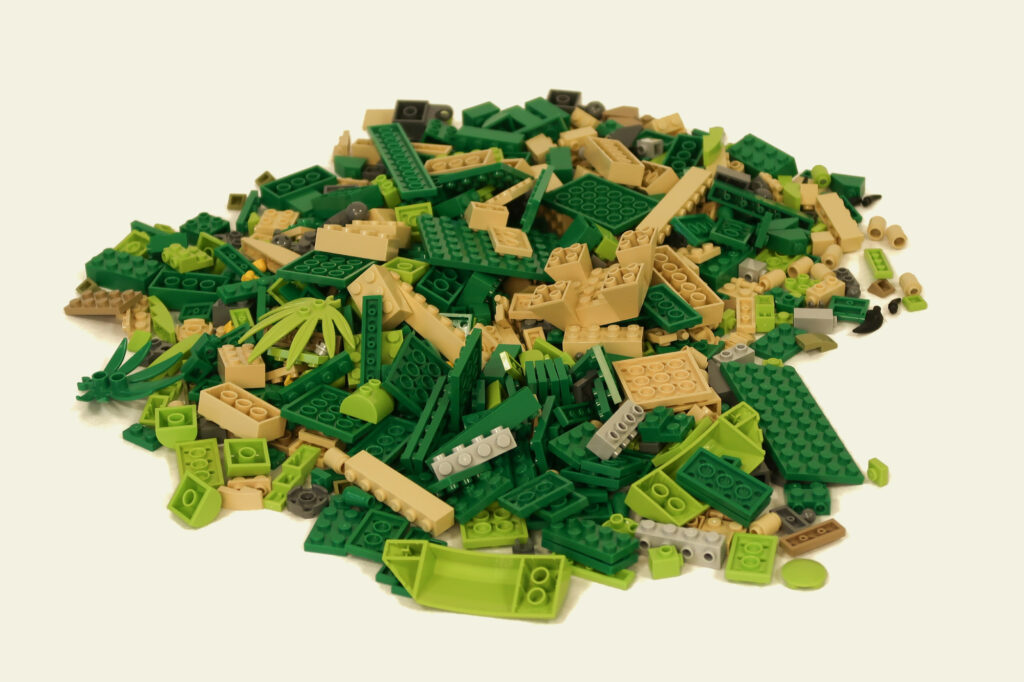
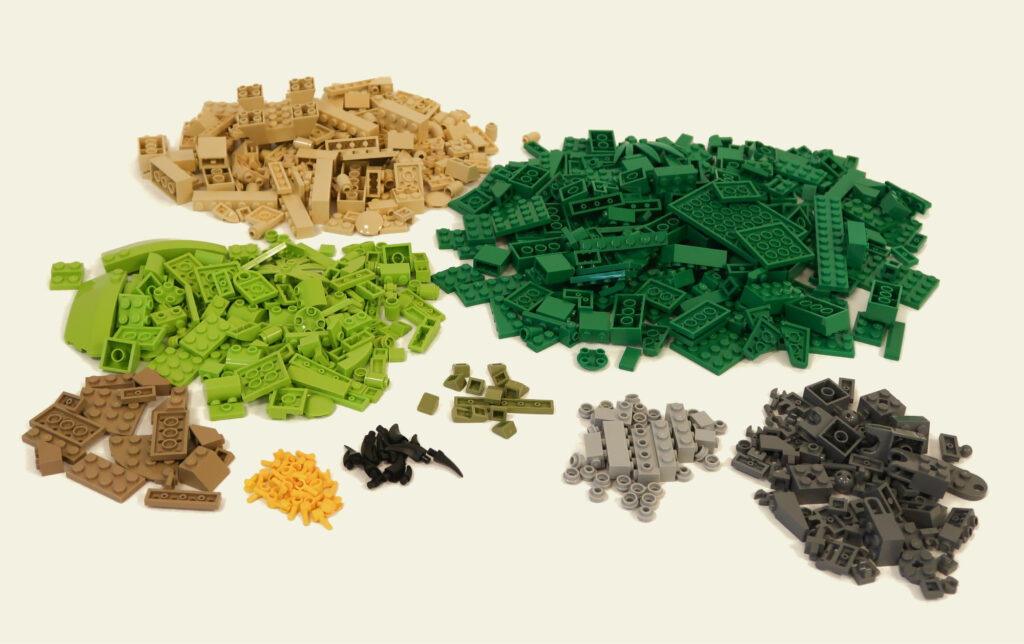
Oder indem man beide Herangehensweisen kombiniert?
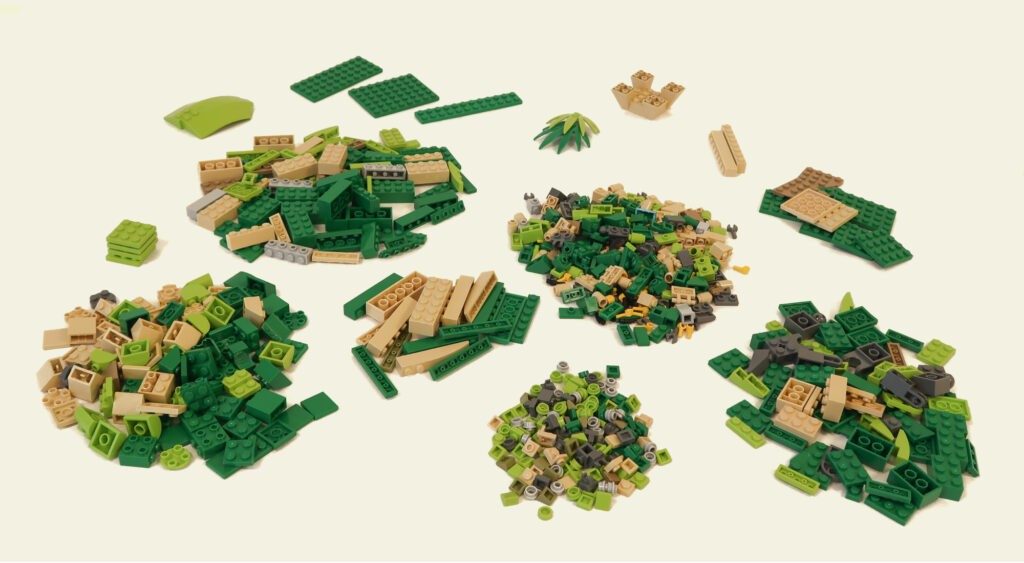
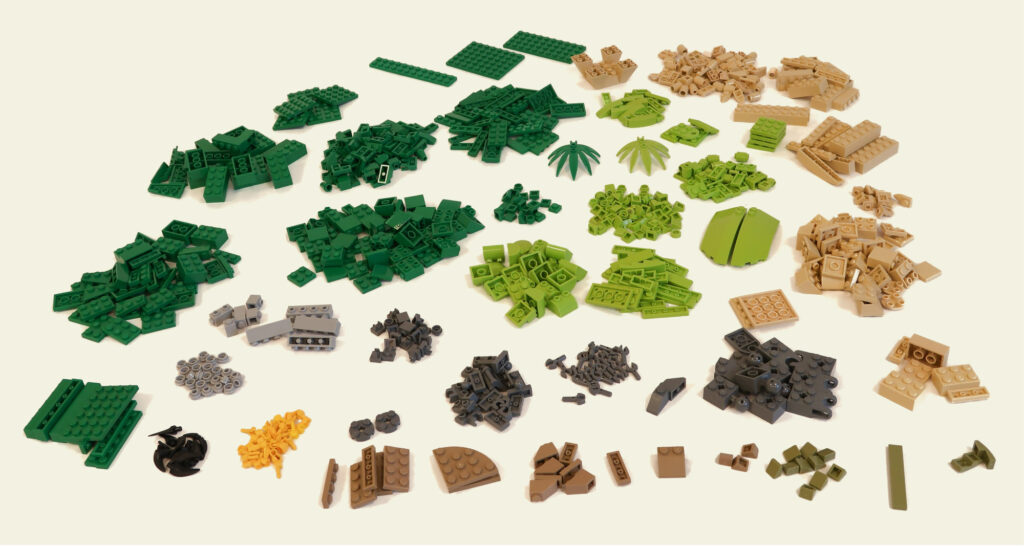
Erst durch sinnvolles Ordnen, Kombinieren und Zusammensetzen erhalten die Steine eine Struktur.
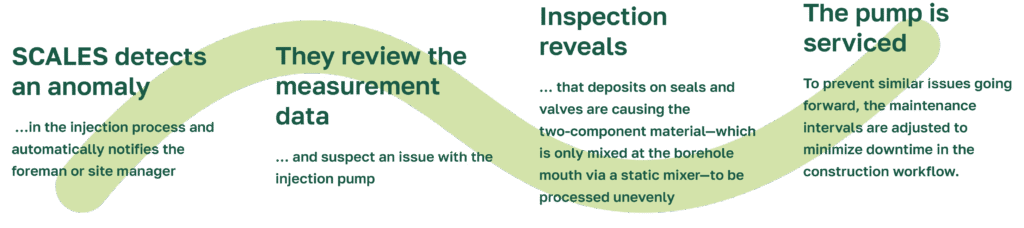
How does this work in SCALES in practice?
An example
Digitalization Meets Intuition
Gut Feelings with a Backup
Intuition and data analysis aren’t opposites. Quite the reverse: they complement each other beautifully. While intuition spots patterns fast, analysis helps put them into context. While your gut says, “Something’s off,” analytics shows: “Here’s what’s happening—and here’s how we fix it.”
What does that mean in practical terms for specialized civil engineering?
More certainty – Early-warning systems spot anomalies before they turn into issues.
Less rework – Because we don’t just record what happened; we understand it in real time and can intervene before it cascades.
Better decisions – Data doesn’t sit forgotten in drawers; it’s visible, tangible and actionable.
Clearer communication – You can’t easily share a “gut feel,” but you can share a solid analysis. And when that’s available online to everyone involved, the broken-telephone game is over.
Smoother workflows – It gets easier to see connections—like between consumption, ground conditions, and execution.
In short:
With a reliable data foundation and transparent analysis, you no longer have to argue from intuition alone—you can argue from evidence. That brings clarity across the team, strengthens your stance, and makes discussions calmer and more productive.
Work in progress!
Sure, we’re not all the way there yet. Fully automated, “smart” actionable analytics are still a work in progress. But the direction is set. With SCALES as the toolbox for everything on site that generates data, we’re laying the foundation.
The goal is clear: less guessing, more knowing. Fewer gut-wrenching doubts, more confident intuition, backed by data.
This website uses cookies to improve your experience. We'll assume you're ok with this, but you can opt-out if you wish. Cookie settings RejectACCEPT
Privacy & Cookies Policy
Privacy Overview
This website uses cookies to improve your experience while you navigate through the website. Out of these cookies, the cookies that are categorized as necessary are stored on your browser as they are essential for the working of basic functionalities of the website. We also use third-party cookies that help us analyze and understand how you use this website. These cookies will be stored in your browser only with your consent. You also have the option to opt-out of these cookies. But opting out of some of these cookies may have an effect on your browsing experience.